

Adenomyosis can influence implantation, miscarriage risk, pain, bleeding, and the timing of fertility treatment, but an imaging finding does not identify the only cause of infertility or dictate IVF automatically. By the end, you will know how diagnosis, ovarian reserve, sperm and tubal results, symptoms, uterine anatomy, and treatment goals fit together when choosing a pathway.
Key takeaways
- Ask how adenomyosis affects implantation and uterine muscle function.
- Confirm which ultrasound or MRI findings support the diagnosis.
- Compare timed intercourse, IUI, IVF, and surgery by your circumstances.
- Ask how medical treatment could change your fertility treatment sequence.
What adenomyosis changes inside the uterus
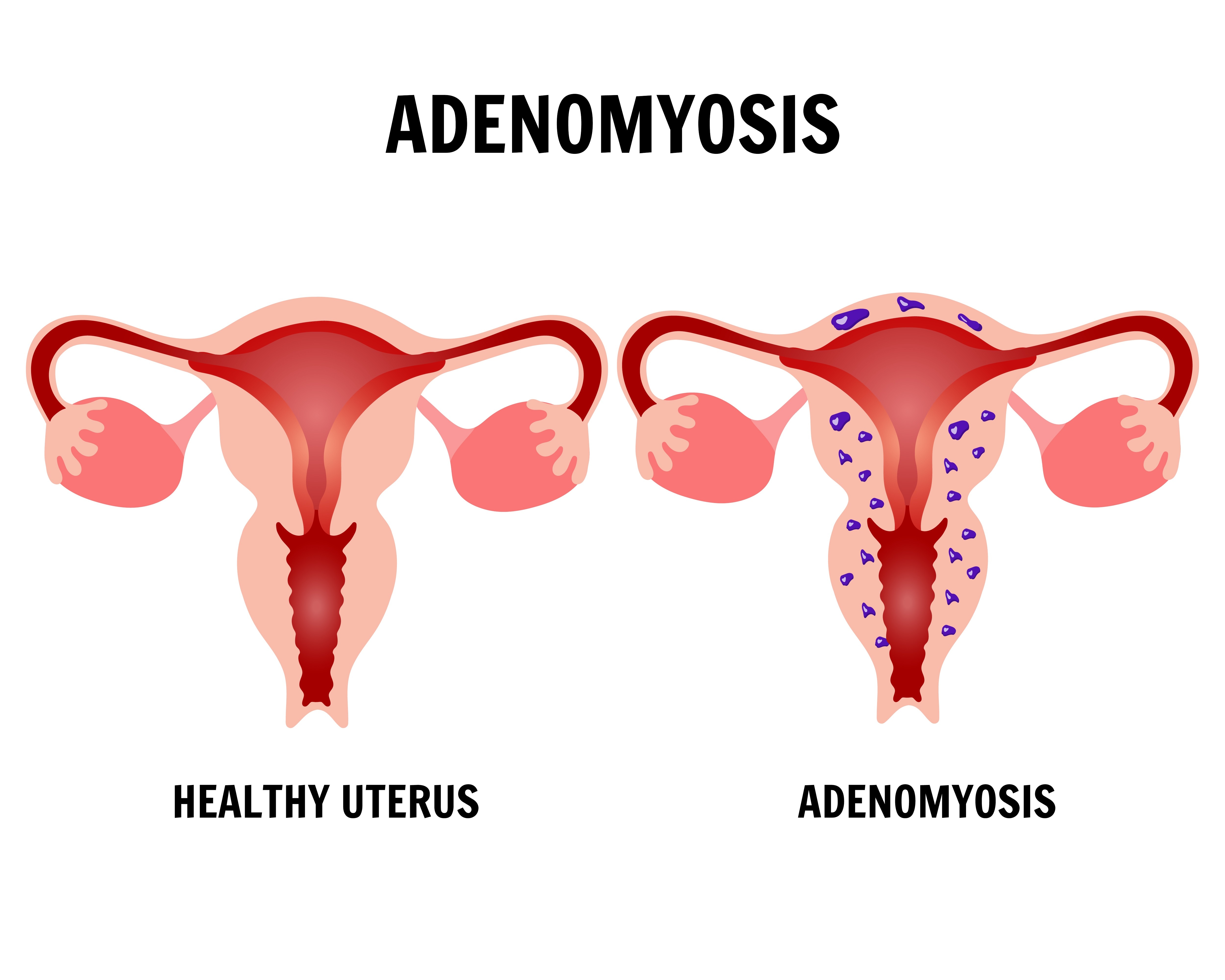
Adenomyosis occurs when endometrial-like tissue grows within the uterine muscle instead of remaining on the inner lining. The muscle can become thickened, enlarged, tender, and less coordinated during menstruation and embryo implantation.
The distinction matters:
- Adenomyosis lies within the uterine wall and can cause heavy bleeding, painful periods, and an altered implantation environment.
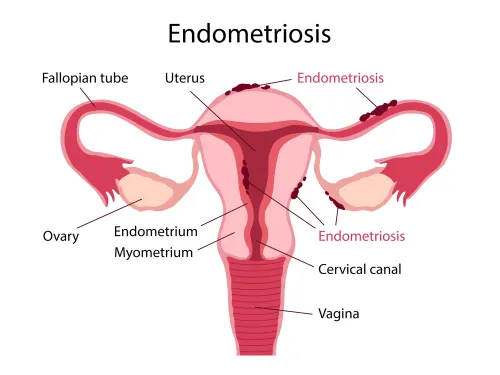
- Endometriosis involves similar tissue outside the uterus, such as around the ovaries, fallopian tubes, or pelvic lining.
- Fibroids are benign growths made from uterine muscle and fibrous tissue; they are not endometrial-like tissue.
Adenomyosis can affect fertility through abnormal uterine contractions, inflammation, changes where the lining meets the muscle, and reduced receptivity for an embryo. These effects can make conception or implantation harder even when ovulation appears normal and the fallopian tubes are open.
Inflammation and a disrupted uterine environment can also raise concern about early pregnancy loss, although adenomyosis does not determine the outcome by itself.
For adenomyosis infertility in Wakad, treatment choices depend on age, infertility duration, ovarian reserve, semen analysis, tubal patency, symptoms, and disease extent. AMH and antral-follicle count help estimate ovarian response and urgency; they do not confirm adenomyosis or predict natural conception alone.
How doctors investigate suspected adenomyosis
The assessment starts with your symptoms and a pelvic examination. Record heavy or prolonged bleeding, painful periods, chronic pelvic pain, pregnancy losses, infertility duration, and a uterus that feels enlarged or tender. Examination can also raise suspicion for coexisting endometriosis, but it cannot confirm adenomyosis alone.
Transvaginal ultrasound is usually the first scan. Ask the report to state whether the pattern is focal or diffuse and whether the uterus is enlarged or distorted. Findings that support adenomyosis include:
- A globular uterus or asymmetric myometrial thickening
- Heterogeneous myometrium, myometrial cysts, or fan-shaped shadowing
- An indistinct or irregular junctional zone
- Focal disease that could affect the uterine cavity or implantation area
| Test | What it shows | When it helps |
|---|---|---|
| Transvaginal ultrasound | Uterine shape, muscle texture, cysts, junctional-zone changes | First-line assessment |
| Pelvic MRI | Extent, focal versus diffuse disease, deep myometrial involvement, cavity distortion | Unclear ultrasound or detailed treatment planning |
MRI is not automatically required. Histological confirmation after hysterectomy is unnecessary for a fertility treatment plan; doctors use the clinical and imaging pattern instead. Complete the wider female infertility in Wakad assessment in parallel: semen analysis, ovulation, tubal patency, AMH, and antral-follicle count. AMH and follicle count guide urgency, not diagnosis.
When timed intercourse, ovulation induction, or IUI still make sense
Timed intercourse is reasonable when you are younger, ovulating regularly, have at least one open fallopian tube, adequate sperm parameters, good ovarian reserve, limited adenomyosis symptoms, and no other reason to use IVF. Expectant management can also be discussed when infertility has been brief and the uterine anatomy is not substantially distorted.
Ovulation induction adds value when ovulation is irregular or absent. IUI can make sense with unexplained infertility, mild sperm abnormalities, or difficulty timing intercourse, provided a tube is open and sperm numbers support insemination. Adenomyosis alone does not make IVF the automatic first step in fertility treatments in Wakad.
Evaluation must include both partners. Semen analysis should happen alongside ovulation and tubal assessment; delaying it can lead to unnecessary treatment aimed at the uterus. AMH and antral-follicle count help estimate ovarian response and urgency, but they do not confirm adenomyosis or predict natural conception by themselves.
Move faster toward specialist review and possibly IVF when you have:
- Older age or reduced ovarian reserve
- Blocked tubes, significant male-factor infertility, or prolonged infertility
- Repeated unsuccessful ovulation induction, timed intercourse, or IUI
- Severe pain or bleeding, a markedly enlarged or distorted uterus, coexisting endometriosis, or recurrent miscarriage
These factors matter in adenomyosis fertility treatment in Wakad just as they do elsewhere.
How adenomyosis changes IVF planning
IVF for adenomyosis in Wakad is worth considering when age or declining ovarian reserve makes delay costly, tubes or semen factors reduce the value of IUI, or adenomyosis is accompanied by repeated implantation failure or miscarriage. The diagnosis alone does not make IVF compulsory.
Your plan should reflect disease extent, uterine enlargement, pain and bleeding, coexisting endometriosis, and previous treatment. AMH and antral-follicle count help estimate ovarian response and plan the number of attempts; they do not confirm adenomyosis or predict embryo quality by themselves.
A GnRH agonist may be used before IVF or frozen embryo transfer, particularly with symptomatic or extensive disease. Prolonged suppression is not a guaranteed improvement in live birth: studies have produced mixed results, so discuss the drug, duration, side effects, and evidence before accepting it as routine.
Transfer timing is often planned after suppression has ended and the endometrium is ready, with a frozen transfer allowing the clinic to separate egg collection from uterine preparation. The timing still depends on your response and treatment history.
Embryo number deserves restraint. A single good-quality embryo is commonly preferred to reduce twin-pregnancy risks; transferring two is considered only after weighing age, embryo quality, previous outcomes, and safety.
Dr Pavan Bendale - IVF Specialist can use these details to build an individualized adenomyosis fertility treatment in Wakad plan rather than applying one protocol to every scan finding.
When medical treatment or adenomyomectomy belongs in the plan
Medical suppression belongs in the plan when pain or heavy bleeding needs control, but it postpones conception. Progestins, combined hormonal contraception, and GnRH agonists manage symptoms; they are not fertility treatment. Set a stop date and define what happens next rather than treating symptom relief as proof that pregnancy chances have improved.
- Choose observation or short-term suppression when imaging shows mild disease, symptoms are limited, and age, ovarian reserve, semen analysis, or tubal findings make prompt treatment more important.
- Discuss adenomyomectomy when focal disease, severe symptoms, repeated implantation failure, or markedly distorted uterine anatomy makes the uterus a clear barrier after other causes are assessed.
- Weigh surgery against its costs: healing can add months before embryo transfer or conception, adhesions can develop, disease can recur, and a deep uterine incision can increase pregnancy risks, including uterine rupture and planned caesarean delivery.
- Reassess the plan if pain persists, the uterus remains enlarged, or ovarian reserve is limited; delaying for surgery may cost more reproductive time than it saves.
For fertility treatments in wakad, ask for a written timeline: medication duration, surgical recovery, when trying can restart, and the backup plan if symptoms recur. Decisions should reflect disease pattern, symptoms, age, and the complete couple’s evaluation.
What to ask before choosing a treatment sequence in Wakad
Do not commit to a treatment sequence until the diagnosis, other infertility factors, time available, and likely limits are written down. A scan showing adenomyosis does not prove it is the sole cause of infertility, so decisions about adenomyosis infertility in wakad should not bypass a couple-based assessment.
Ask for a plan that reviews:
- Transvaginal ultrasound findings, MRI if ultrasound is unclear or disease mapping is needed, and the phenotype: focal or diffuse disease, uterine enlargement, junctional-zone or myometrial involvement, pain, bleeding, and coexisting endometriosis.
- AMH and antral-follicle count as estimates of ovarian response, not tests that confirm adenomyosis or predict embryo quality.
- Semen analysis, ovulation, tubal patency, endometriosis, fibroids, and age-related egg decline; delaying semen testing can lead to unnecessary treatment directed at female infertility in wakad.
- Your treatment deadline, number of attempts, miscarriage history, symptom-control needs, and the added time and uterine risk of surgery.
| Pathway | When it may fit | Main limit |
|---|---|---|
| Timed intercourse or IUI | Mild disease and no major coexisting factor | Time may be lost |
| IVF | Tubal, male-factor, age, or repeated-treatment concerns | Does not remove adenomyosis-related pregnancy risks |
| Medical treatment or surgery | Severe symptoms or distorted anatomy | Delays conception and may affect uterine strength |
Ask which outcome would trigger a change in fertility treatments in wakad, and what success measure matters: pregnancy, live birth, symptom relief, or avoiding surgery.
Frequently asked questions
What does adenomyosis change inside the uterus?
Endometrial-like tissue within the uterine muscle can cause thickening, enlargement, tenderness, painful periods, and less coordinated muscle activity during implantation.
How do doctors investigate suspected adenomyosis?
Doctors assess symptoms and perform a pelvic ultrasound; MRI can provide additional detail when ultrasound findings are unclear or treatment planning requires it.
When do timed intercourse, ovulation induction, or IUI still make sense?
These options can remain reasonable when age, ovarian reserve, fallopian tube status, sperm findings, and the severity of adenomyosis support a lower-intervention approach.
How does adenomyosis change IVF planning?
Your doctor may consider adenomyosis severity, uterine anatomy, ovarian reserve, embryo strategy, and whether medical suppression before embryo transfer fits your plan.
When does medical treatment or adenomyomectomy belong in the plan?
Medical treatment may be considered to control symptoms or prepare for treatment, while adenomyomectomy requires careful discussion of lesion location, uterine repair, fertility goals, and pregnancy risks.