

Cycles shorter than 21 days, longer than 35 days, fewer than eight periods a year, or bleeding that changes sharply from one cycle to the next can make ovulation difficult to predict. You will learn how to separate irregular timing from other bleeding problems, confirm whether ovulation occurred, and choose the right point for fertility evaluation or treatment.
Key takeaways
- Cycles under 21 or over 35 days need evaluation when the pattern persists.
- Bleeding after 90 days without a period needs separate medical attention.
- Confirm ovulation with progesterone testing or ultrasound when home tests conflict.
- Bring cycle dates, bleeding records, medicines, and prior fertility test results to your consultation.
What counts as an irregular period, and which bleeding patterns need separate attention?
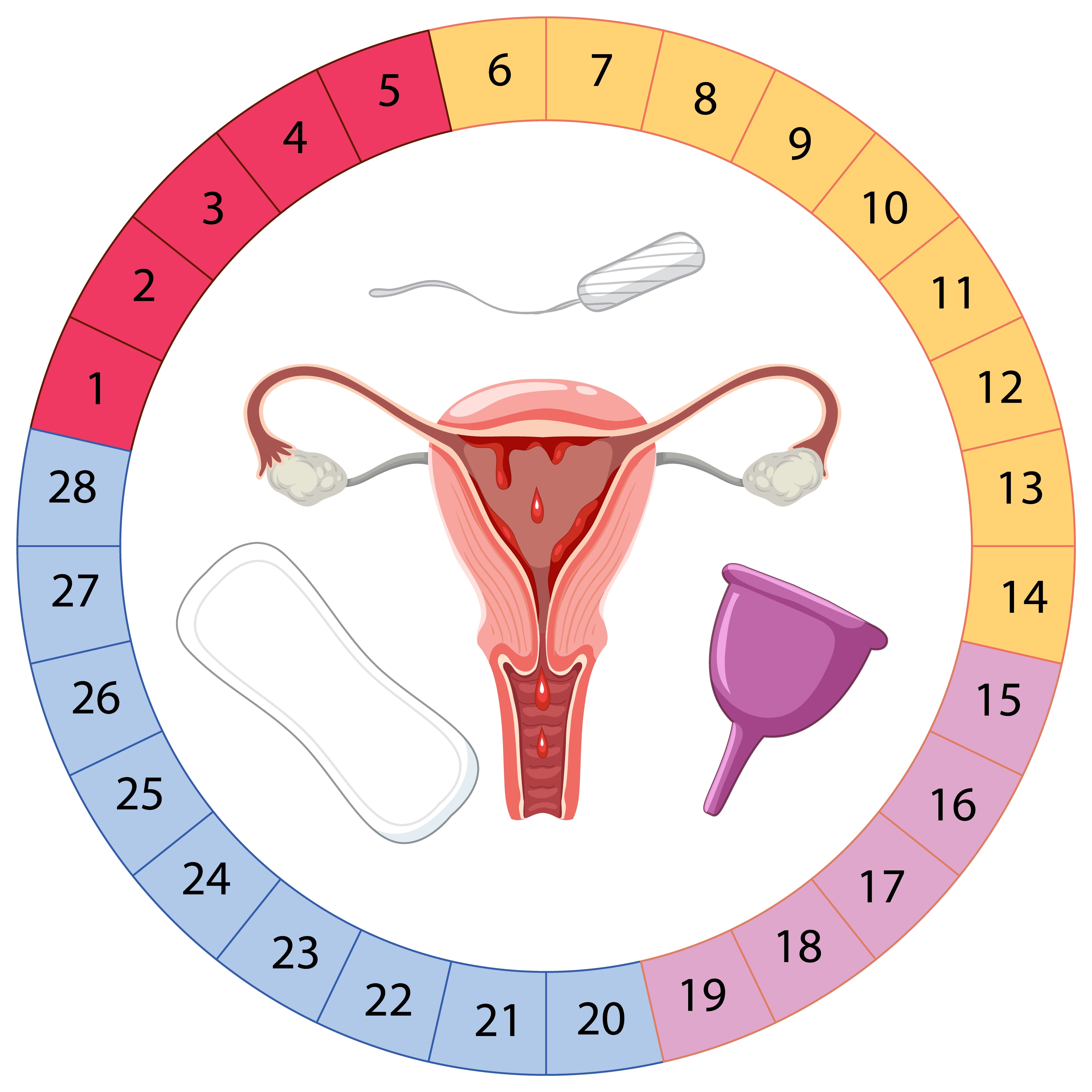
A menstrual cycle counts as irregular when it is persistently shorter than 21 days, longer than 35 days, varies substantially between cycles, occurs fewer than eight times a year, or includes any interval longer than 90 days. One late period does not prove an ovulation disorder, and irregular periods do not automatically mean infertility.
| Pattern | What it may indicate | Why evaluation differs |
|---|---|---|
| Unpredictable timing | Ovulation may be infrequent or difficult to predict | Review cycle history and ovulation |
| Prolonged bleeding | Bleeding lasting longer than usual or more than seven days | Assess anaemia, hormones, fibroids, polyps, or pregnancy-related causes |
| Spotting between periods | Bleeding outside the expected period | Consider contraception, infection, cervical changes, polyps, or hormonal causes |
| Very heavy bleeding | Soaking a pad hourly, passing large clots, or bleeding that disrupts normal activities | Check urgently for blood loss and its cause |
| Bleeding after sex | Contact bleeding from the cervix, infection, polyps, or other conditions | Requires an examination rather than an ovulation assessment alone |
Seek urgent care if you are soaking pads rapidly, fainting, or experiencing severe pelvic pain. Prolonged absence of periods, called amenorrhoea, also needs review rather than waiting for the next cycle.
If pregnancy has not occurred after 12 months of regular unprotected intercourse, arrange an assessment. Seek help after six months when you are 35 or older, and sooner for amenorrhoea, suspected endometriosis, previous pelvic disease, known fertility risks, or age over 40. Ovulation is only one part of female infertility evaluation.
Why ovulation becomes unclear: causes and the first fertility work-up
Ovulation problems can result from low energy intake, intense exercise, being underweight or obese, thyroid disease, high prolactin, perimenopause, reduced ovarian function, or certain medicines—not only PCOS. Hypothalamic amenorrhoea can occur when nutrition or energy availability is too low, even if exercise feels routine.
These causes can produce female infertility by reducing or stopping egg release.
A first fertility work-up follows a practical sequence:
- Record menstrual timing, bleeding duration, skipped periods, weight changes, exercise, eating patterns, symptoms, and pregnancy attempts.
- Take a pregnancy test. Pregnancy must be excluded before interpreting a missed period as an ovulation disorder.
- Review every medicine and supplement, including antipsychotics, steroid medicines, hormonal contraception, and drugs that affect prolactin or thyroid function.
- Check recent weight gain or loss, restrictive eating, and heavy training.
- Measure thyroid-stimulating hormone. Test prolactin when periods are absent or infrequent, milk discharge occurs without breastfeeding, or symptoms suggest raised prolactin.
- Test androgens when acne, excess facial hair, scalp hair thinning, or other androgen signs are present.
- Use pelvic ultrasound to assess the uterus, ovaries, antral follicles, and other pelvic findings.
- Add ovarian-reserve tests such as AMH or antral follicle count when useful for treatment planning. They support the assessment; they do not diagnose infertility alone or measure egg quality.
- Arrange at least one semen analysis and consider a fallopian-tube patency test when the history or treatment plan warrants it. Ovulation treatment cannot open blocked tubes or correct severe male-factor infertility.
How to confirm ovulation when calendars and home tests disagree
Day 21 is not a universal progesterone-test date. To establish whether an egg was released, match testing to your cycle: draw mid-luteal serum progesterone about one week before the expected next period, or about one week after suspected ovulation. A single result supports recent ovulation, but fluctuating progesterone cannot reliably assess luteal-phase quality.
| Method | What it shows | Limitation |
|---|---|---|
| Serum progesterone | Blood evidence of recent ovulation | Incorrect timing can mislead; one result cannot assess luteal-phase quality |
| Serial ultrasound follicle tracking | Follicle growth and changes around ovulation | Requires repeated clinic visits |
| Urine ovulation-predictor kit | A rise in luteinising hormone before possible ovulation | Start early enough to cover possible fertile days; PCOS can cause multiple rises or persistent positive results without proving egg release |
| Cervical mucus or calendar app | Recorded patterns around possible fertile days | Neither confirms ovulation |
| Basal body temperature | Temperature shift after ovulation | Confirms the change later, so it helps less with real-time intercourse timing in unpredictable cycles |
With irregular periods, a negative or confusing urine kit does not diagnose infertility. Ovulation problems need better evidence when results conflict: ultrasound or appropriately timed blood testing can show more than a calendar prediction. A temperature rise confirms a shift only after ovulation has occurred.
How unpredictable ovulation affects conception and changes treatment choices
Fertilisation requires sperm and egg to meet during a limited fertile window. When egg release is unpredictable, timed intercourse becomes difficult even if semen analysis and fallopian tubes are normal. A negative or confusing home ovulation test does not prove infertility, especially with PCOS.
The right irregular periods fertility treatment depends on the cause:
- Correct thyroid disease or high prolactin, which can interrupt egg release.
- Review medicines with your clinician; some medicines affect periods or ovulation.
- Restore adequate nutrition when low energy intake or underweight status is suppressing ovulation.
- Reduce excessive exercise when training contributes to hypothalamic amenorrhoea.
- Address weight-related factors, including obesity or substantial recent weight change.
- For anovulatory infertility caused by PCOS, with no other infertility factor, letrozole is the evidence-based first-line ovulation-induction medicine.
- Discuss clomiphene if letrozole is unsuitable or unsuccessful. Gonadotrophins or IVF may enter the discussion after simpler treatment fails or when another indication exists.
Gonadotrophins are not tablets you take without supervision. Ultrasound monitoring and dose adjustment are needed because several follicles can develop, raising the risk of multiple pregnancy and ovarian hyperstimulation syndrome; a cycle may need cancellation if the response is unsafe.
Ovulation induction cannot overcome blocked fallopian tubes or untreated severe male-factor infertility. Those findings change the plan, which is why treatment should follow assessment of ovulation, sperm, tubes, the uterus, and age-related factors rather than cycle length alone.
What to bring to a fertility consultation in Wakad
Start a cycle diary for at least three cycles before your appointment. If you searched for irregular periods and infertility in Wakad or irregular periods fertility treatment, bring observations rather than relying on memory.
- Mark the first day of every bleed, bleeding duration, spotting, pain, and bleeding after sex.
- Record home pregnancy-test and ovulation-test results, including the test date.
- List every medication, dose, supplement, and recent change.
- Note exercise intensity, dietary changes, and weight changes.
Bring these records and reports:
| Report or history | What to bring | Why it matters |
|---|---|---|
| Pelvic assessment | Prior ultrasound report and images | Shows uterine or ovarian findings |
| Hormone testing | Thyroid, prolactin, progesterone, and AMH results | Adds context to ovulation and ovarian reserve |
| Partner testing | Semen-analysis report | Female infertility evaluation must not overlook sperm factors |
| Tube assessment | Hysterosalpingogram, HyCoSy, or other tubal-test report | Identifies blockage that tablets cannot correct |
Explain how long you have tried to conceive, intercourse frequency, previous pregnancies or miscarriages, pelvic infections, pelvic or abdominal surgery, and any family history of menopause before age 40. A consultation with Dr Pavan Bendale - IVF Specialist can coordinate ovulation assessment, partner testing, and treatment instead of choosing tablets from cycle length alone.
Age matters even when cycles look regular: seek assessment after six months of trying at age 35 or older, sooner after age 40, or promptly after prolonged absent periods.
Frequently asked questions
What counts as an irregular period?
A cycle is irregular when it is persistently shorter than 21 days, longer than 35 days, varies substantially, occurs fewer than eight times a year, or includes an interval longer than 90 days.
Why can ovulation become unclear?
Irregular ovulation can result from conditions such as polycystic ovary syndrome, thyroid disorders, high prolactin, major weight changes, intense exercise, stress, or reduced ovarian function. A fertility work-up identifies the likely cause.
How can you confirm ovulation when calendars and home tests disagree?
A clinician can use a blood progesterone test at the correct point in the cycle, ultrasound follicle tracking, or both. Calendar predictions are less reliable when cycle length changes.
How do irregular periods affect fertility treatment?
Unpredictable ovulation makes timing intercourse or insemination harder. Treatment may include ovulation induction with monitoring, while the choice depends on the cause and the results of both partners' fertility evaluations.
What should you bring to a fertility consultation in Wakad?
Bring recent cycle dates, bleeding patterns, ovulation-test results, pregnancy history, medication and supplement details, medical reports, and previous fertility investigations.