

A report showing zero sperm does not identify the cause or prove that biological fatherhood is impossible. You need confirmation with a properly examined sample, a work-up that distinguishes blocked sperm transport from impaired sperm production, and a treatment plan matched to both partners’ circumstances.
Key takeaways
- Confirm azoospermia with two semen analyses and concentrated laboratory examination.
- Identify blockage, hormone problems, testicular causes and genetic factors before choosing treatment.
- Obstructive azoospermia may be treated with repair or sperm retrieval for ICSI.
- Ask clinics about male infertility testing, genetic counselling, retrieval expertise and total treatment steps.
What does a nil sperm count mean, and how is azoospermia confirmed?
A nil sperm count usually means azoospermia: no sperm were seen in the ejaculate. One semen report cannot confirm it, because very low sperm numbers can be missed unless the sample is concentrated and examined carefully.
Confirm the result with at least two semen analyses:
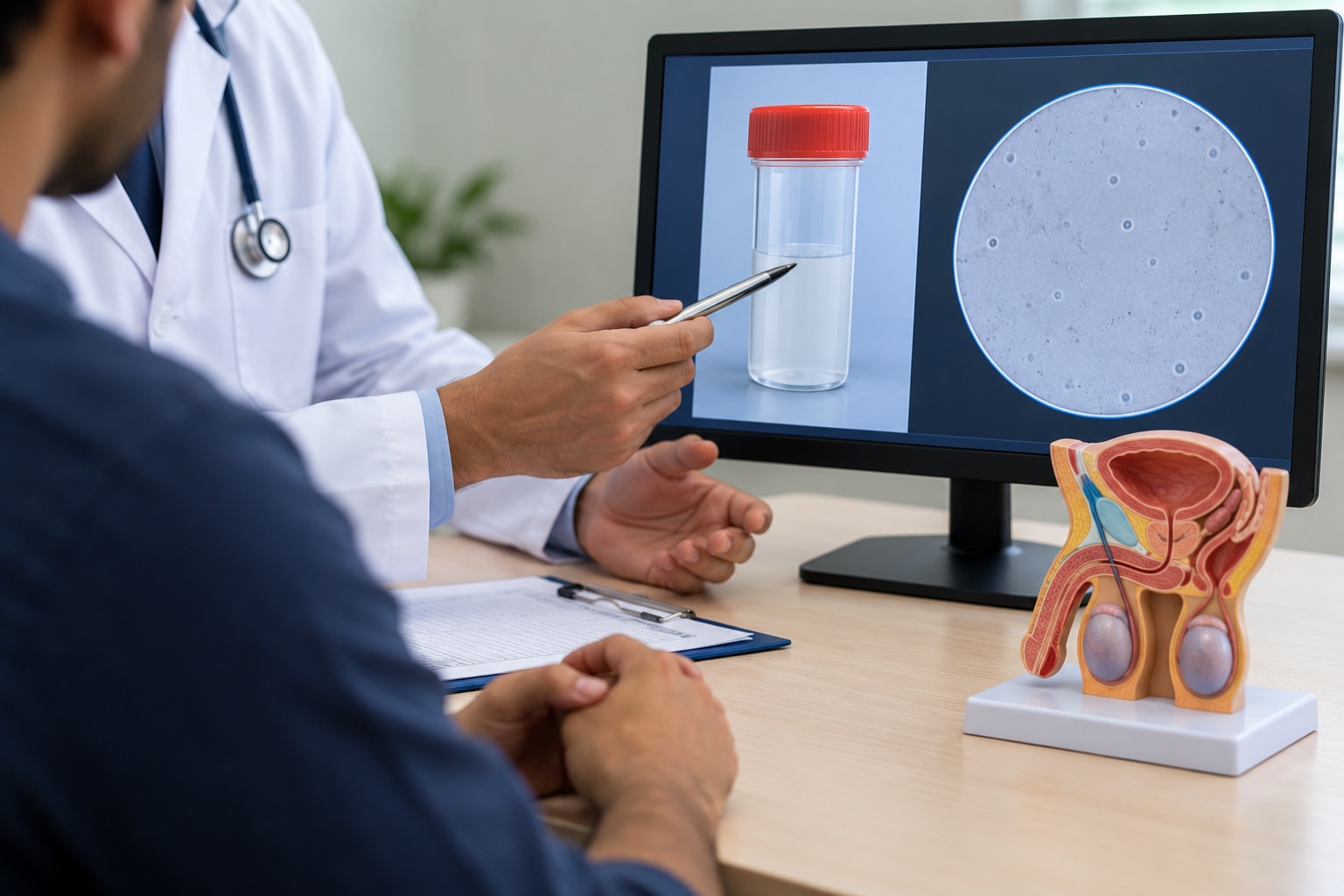
- Follow the laboratory’s abstinence instruction, commonly two to seven days. Collect the entire ejaculate, including the first and last portions, because losing any part can distort semen volume and sperm findings. Do not use lubricants or ordinary household containers.
- Ask the laboratory to record semen volume and pH, measure sperm concentration, centrifuge the sample, and examine the concentrated pellet under a microscope for rare sperm.
- Ask whether rare sperm were found, whether the laboratory received the entire sample, and whether the report specifically says “no sperm seen” after centrifuged-pellet examination.
The decisive diagnosis is obstructive or non-obstructive azoospermia. Obstructive azoospermia means sperm production may continue, but a blockage in the vas deferens, epididymis or ejaculatory pathway stops sperm reaching the semen. Non-obstructive azoospermia means sperm production is severely reduced or absent because of testicular, hormonal, genetic, medication, chemotherapy or radiation-related factors.
This distinction changes the next step: reconstruction for a blockage, hormonal treatment for selected hormone disorders, sperm retrieval, or testicular assessment. It also guides the male infertility evaluation and prevents treatment based on an unconfirmed result.
What causes nil sperm count, and which tests identify the cause?
Doctors investigate whether a nil sperm count results from blocked sperm transport or severely reduced sperm production, the two main pathways in male infertility. Ask about ejaculation and puberty, vasectomy, groin, scrotal or pelvic operations, infections, chemotherapy, radiation, high fever, heat exposure, prescribed medicines, testosterone injections or gels, and anabolic steroids.
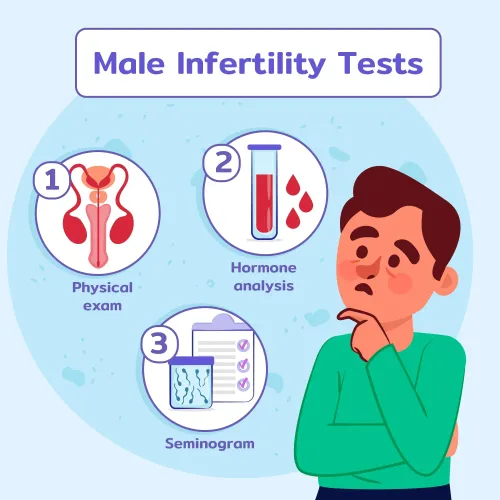
Examination records testicular size and consistency, both vas deferens, epididymal fullness, and signs of hormonal disease.
The usual diagnostic checks include:
- Morning total testosterone, follicle-stimulating hormone (FSH), luteinising hormone (LH), and prolactin. Add thyroid testing when symptoms or examination findings suggest thyroid disease.
- Scrotal ultrasound to assess testicular structure, varicocele, epididymal changes and other testicular abnormalities.
- Transrectal ultrasound when semen volume is low, semen is acidic, or ejaculatory-duct obstruction near the prostate is suspected.
- Karyotype testing for chromosomal causes of testicular sperm-production failure.
- Y-chromosome microdeletion testing for selected men with severe non-obstructive azoospermia.
- CFTR-related testing when one or both vas deferens are congenitally absent.
| Test | What it helps identify | When it applies |
|---|---|---|
| Blood hormones | Pituitary, testicular and prolactin-related disorders | Initial assessment guided by examination |
| Scrotal ultrasound | Testicular structure, varicocele and epididymal or testicular abnormalities | Abnormal examination or suspected scrotal cause |
| Transrectal ultrasound | Ejaculatory-duct blockage | Low volume, acidic semen or prostate-level obstruction |
| Genetic tests | Chromosomal, Y-chromosome or CFTR-related causes | Severe sperm-production failure or absent vas deferens |
The test plan follows the clinical picture and local specialist guidance, not a fixed package for every man.
Which treatments apply to obstructive and non-obstructive azoospermia?
Treatment depends on whether sperm are being made but blocked, or production itself is impaired. That distinction guides male infertility care and prevents an unsuitable treatment from delaying pregnancy.
| Diagnosis | Main treatment options | Key limitation |
|---|---|---|
| Obstructive azoospermia | Vasovasostomy, vasoepididymostomy, or sperm retrieval followed by assisted reproduction | Reconstruction depends on blockage location and duration, previous procedures, surgical expertise, female-partner factors and available time |
| Non-obstructive azoospermia | Treat an identified hormonal disorder, consider sperm retrieval, or use donor sperm when retrieval fails | Treatment cannot reliably restore sperm production in primary testicular failure |
Vasovasostomy reconnects the vas deferens; vasoepididymostomy connects it to the epididymis when the blockage is closer to the testicle. Successful reconstruction can reopen a route to natural conception, while retrieval with IVF and ICSI may be more time-efficient for some couples.
Gonadotropins target hypogonadotropic hypogonadism, where weak pituitary signals suppress sperm production. Sperm can take several months to appear. This treatment is not a universal answer for primary testicular failure. Do not start testosterone injections or gels while trying to conceive without specialist advice: external testosterone can suppress intratesticular sperm production.
Tell the clinician about anabolic steroids and every medicine before changing anything.
Varicocele repair is considered when infertility, abnormal semen findings and a clinically palpable varicocele occur together. It is not a guaranteed cure for severe sperm-production failure. Choose among these fertility treatments after considering the cause, treatment timeline, female partner’s age, ovarian reserve and tubal status.
When are sperm retrieval, ICSI and genetic counselling used?
Laboratory fertilisation requires viable sperm, but the retrieval route depends on whether azoospermia is obstructive or non-obstructive. In non-obstructive azoospermia, microdissection testicular sperm extraction (micro-TESE) uses an operating microscope to locate small areas of sperm production and is generally preferred to blind testicular sampling.
1. Retrieval is not guaranteed. Micro-TESE can cause pain, bleeding, infection or testicular injury, so ask about the expected benefit, surgical risks and backup plan before consenting.
2. In obstructive azoospermia, sperm production may continue normally. A surgeon can collect sperm from the epididymis or testis, then coordinate the retrieval with the IVF cycle rather than assuming a fresh sample will be available on egg-collection day.
3. Ask whether retrieved sperm can be frozen and whether the quantity is sufficient for the planned eggs and embryos. ICSI, or intracytoplasmic sperm injection, involves an embryologist injecting one selected sperm directly into an egg; it does not create sperm or correct azoospermia.
4. Before retrieval or ICSI, discuss the karyotype and Y-chromosome microdeletion results with a genetic counsellor. A Y-chromosome deletion can pass to male offspring through ICSI, depending on the finding.
If no usable sperm is retrieved, donor sperm with IUI or IVF is an alternative. Counselling should cover consent, disclosure to the child, legal and ethical questions, and applicable Indian regulations before choosing this pathway among fertility treatments.
How should couples compare nil sperm count treatment in Wakad?
Choose a centre by its diagnostic pathway and laboratory capability, not by its address. For nil sperm count treatment in Wakad, ask these questions before comparing prices or timelines:
- Will the centre repeat semen analysis with centrifuged-pellet review?
- Is a male-infertility specialist involved?
- Can it arrange morning hormones, selected genetic tests, scrotal ultrasound and transrectal ultrasound when indicated?
- Can it perform or coordinate epididymal sperm retrieval, testicular sperm retrieval and micro-TESE?
- Can its embryology laboratory freeze retrieved sperm and provide ICSI?
| Figure to request | What to clarify |
|---|---|
| Retrieval rate | Does it include obstructive, non-obstructive or both groups? |
| Fertilisation rate | Is it calculated per injected egg or per treatment cycle? |
| Embryo development | Which day and embryo-quality criteria are used? |
| Clinical pregnancy rate | Is the figure per transfer or per retrieval? |
| Live birth rate | Which patient age and diagnosis groups does it represent? |
Assess both partners at the same time. Female age, ovarian reserve, tubal status and time trying to conceive can make reconstruction, retrieval with ICSI or donor sperm the more time-efficient route. A consultation with Dr Pavan Bendale - IVF Specialist can help compare these fertility treatments against the couple’s findings.
Bring both semen reports, operation notes, medication and steroid history, hormone results and genetic reports. Choose the plan that states the cause, expected timeline, risks, backup options and possible effects on future children.
Frequently asked questions
What does a nil sperm count mean, and how is azoospermia confirmed?
A nil sperm count usually means azoospermia, where no sperm are seen in ejaculate. Confirm it with two semen analyses, including centrifuged or concentrated examination of the sample.
What causes nil sperm count, and which tests identify the cause?
Causes include blocked sperm ducts, hormonal disorders, testicular damage, medicines, infections and genetic conditions. Evaluation can include examination, FSH and testosterone tests, scrotal ultrasound, genetic tests and review of medical history.
Which treatments apply to obstructive and non-obstructive azoospermia?
Obstructive azoospermia may respond to microsurgical repair or sperm retrieval. Non-obstructive azoospermia requires treatment based on its cause and may involve hormonal treatment, micro-TESE or assisted reproduction.
When are sperm retrieval, ICSI and genetic counselling used?
Sperm retrieval is used when sperm are produced but do not reach the ejaculate, or when assisted reproduction is planned. ICSI injects one sperm into an egg. Genetic counselling is important when test results suggest an inherited cause.
How should couples compare nil sperm count treatment in Wakad?
Compare diagnostic completeness, andrology and sperm-retrieval access, ICSI laboratory experience, genetic counselling, treatment timelines, consent practices and the total number of visits and procedures.